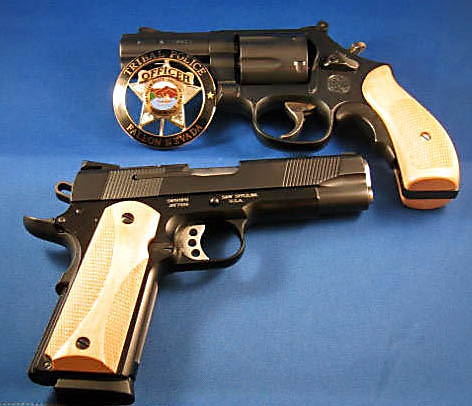
Saturday, January 27, 2007

Pimp My Pistol “The Gold Heckler & Koch Model 4” .32 ACP Pistol
Also An Update on the Springfield EMP 9mm
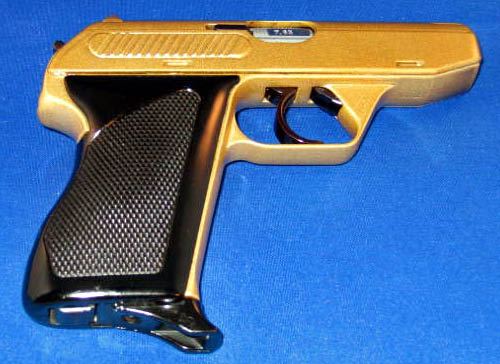
This pistol is an odd duck; there is no middle ground here, you either think it is beautiful or ugly. Me, I am strongly leaning toward ugly. It is also finicky. When it liked a particular brand of ammo it shot it very well. When it didn’t like the brand of ammo it gave me feeding fits akin to force-feeding strained spinach into my daughter’s mouth when she was a baby.

First, let’s look at where this pistol came from. H & K grew out of the ashes of the Mauser firearms company in post WWII. The Mauser factory was occupied for about a year by the French military and shut down in 1946. In 1949 Edmund Heckler and Theodor Koch, who were former Mauser engineers, gained permission to go back to the factory to produce machine tools. Eventually they began producing military rifles for the West German armed forces as well as other countries around the globe.

The H & K model 4 was their first commercially produced pistol and was manufactured from 1964 to 1983. The pistol has is roots in the Mauser Hsc. It bears a slight resemblance and disassembles in exactly the same manner. The major difference is that it is smaller and lighter (about 17 ounces) due to its lightweight aluminum frame. The model 4 was available in .22LR, .25 ACP, .32 ACP, and .380 ACP. In fact they produced a pistol pack that contained barrels and magazine in all four calibers.

Around 38,000 of these pistols were produced with 12,000 going to the West German police and other government agencies. Here are the specifics on this pistol:

Calibes: 7.65x17SR/.32ACP;
Length: 6 3 / 16 inches
Height: 4 21 / 64 inches
Width at Butt: 1 17 / 64 inches
Barrel Length: 3 11 / 32 inches
Weight of Pistol: 16.9oz
Magazine Capacity: 8 + 1

This specimen has black plastic grips wrap-around grips with a thumb rest on the left panel. The sights are small but provide a pretty good sight picture. The magazine release is mounted on the heal of the grip in the typical European fashion. Overall I like this pistol, it feel great in the hand, is accurate and easy to shoot. I also like the way it disassembles:
1. Remove the magazine.
2. Press down on the slide release latch inside the front of the trigger guard.
3. Pull the slide forward and up off of the frame.
4. Remove the barrel from the slide.

As outlined above the pistol breaks down into four components, the magazine, the frame, the slide and the barrel. The recoil spring is permanently attached to the barrel. I like the minimal simplicity of this design. Once taken apart for cleaning there are only four pieces laying on the work bench; there are no slide release pins and levers, no screws, and no barrel bushings, etc. lying about. You do not need a bushing wrench, screwdriver, mallet, guide rod pin or guide rod clamp to disassemble the H & K Model 4.

The downside to this pistol is that it is extremely ammunition sensitive. It would only feed three rounds; Wolf Gold 71 grain FMJ, Magtech 71 grain FMJ, and CCI Blazer. It would not feed hollowpoint ammunition at all. This may not be much of a disadvantage as some gun scribes declare that in a .32 you are better off getting the extra penetration of an FMJ bullet as opposed to the unreliable expansion and lesser penetration of hollowpoint ammo. However, not only would the model 4 not shoot hollowpoints, it also would not feed some brands of FMJ ammo such as Remington and Federal Classic.
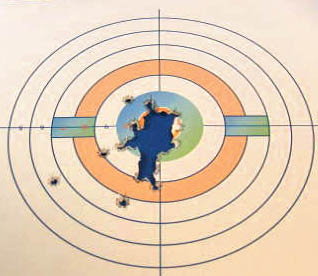
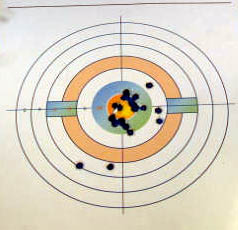
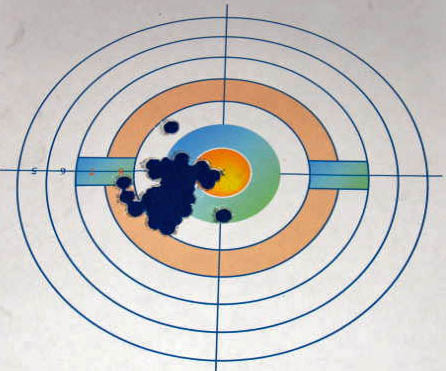
(TARGET SHOT AT 21 FEET WITH 50 ROUNDS OF MAGTECH 71 GRAIN FMJ AMMUNITION--THIS ROUND SHOWED THE BEST ACCURACY IN THE HK MODEL 4)


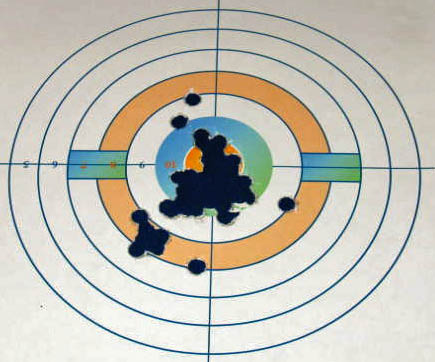
(TARGET SHOT AT 21 FEET WITH 45 ROUNDS OF SELLIER & BELLOIT 73 GRAIN FMJ AMMUNITION. THIS ROUND WOULD NOT FEED RELIABLY WHICH IS A SHAME AS IT POSTS A VELOCITY OF 1043 FEET PER SECOND, THE FASTEST OF ALL OF THE READILY AVAILABLE .32ACP AMMUNITION)


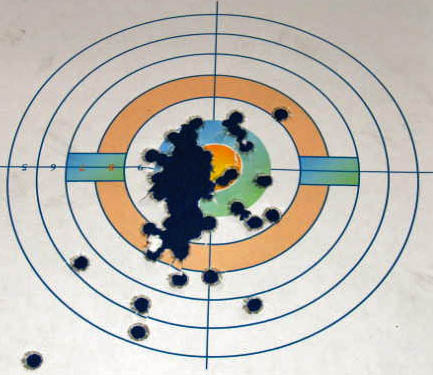
(TARGET SHOT AT 21 FEET WITH 25 ROUNDS OF WOLF GOLD 71 GRAIN FMJ AMMUNITION)


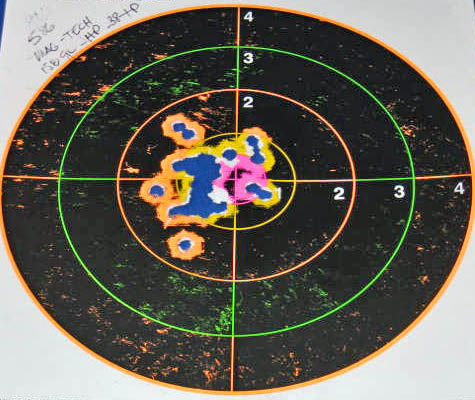
(TARGET SHOT AT 21 FEET WITH 24 ROUNDS OF CCI BLAZER 71 GRAIN FMJ AMMUNITION. WHILE THIS ROUND FED RELIABLY AND GROUPED WELL IT DID SHOOT RATHER LOW)
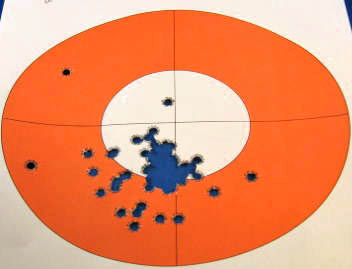


(TARGET SHOT AT 21 FEET WITH A MIX OF FEDERAL PREMIUM, FEDERAL PERSONAL DEFENCE, AND WINCHESTER SILVER TIP AMMUNITION. ALL OF THESE ARE HOLLOW POINT CARTRIDGES WHICH WOULD NOT FEED RELIABLY. AGAIN THIS IS A SHAME AS THE SILVER TIP AMMO POSTED THE BEST GROUPING IN THE BOTTOM LEFT QUADRANT OF THE WHITE CIRCLE.)
That only leaves the 800 pound gorilla up for discussion; the finish on this pistol. I can find no mention of a greenish-gold finish on the internet or in any of my reference books. The finish appears to be very durable and as all markings on the pistol are sharp it does not appear to have been refinished. I would love to know more about this pistol.

While I like the simplicity, ergonomics, and accuracy (with some ammunition) I doubt if I would ever carry it for self defense purposes. It comes down to two issues:
1. The fact that it is so ammunition sensitive would not allow me to feel comfortable with it.
2. The second reason is its finish. The presentation of this pistol might not act as a deterrent on a thug intent on a robbery or other crime. The criminal might take one look at this small golden gun and assume that it is a toy gun which might force me into actually having to shoot it to prove otherwise. When called upon to thwart an assault you want your pistol to look intimidating. You want presentation of your weapon to cause the assailant to reassess his intent and surmise that deadly force is on your side.

Springfield EMP Update

After last week’s posting several people corresponded that they wanted to know if the problems with reliability were indeed resolved after a 200 round shoot-in. I am happy to report that they were. The EMP reliably fed both Wolf Gold 147 grain hollowpoint ammo and Remington Golden Saber 147 grain JHPs. The best accuracy in a hollowpoint still seems to be the Speer Gold Dot 115 grain JHP.

(TARGET ON THE LEFT WAS SHOT WITH 50 ROUNDS OF REMINGTON 115 GRAIN FMJ AMMUNITION, THE TARGET ON THE RIGHT REPRESENTS 50 ROUNDS OF WINCHESTER 115 GRAIN AMMO.)


(TARGET ON THE LEFT WAS SHOT WITH 15 ROUNDS OF REMINGTON GOLDEN SABER 147 GRAIN JHP AMMUNITION. TARGET ON THE RIGHT IS 10 ROUND OF WOLF GOLD 147 GRAIN JHP AMMO.)
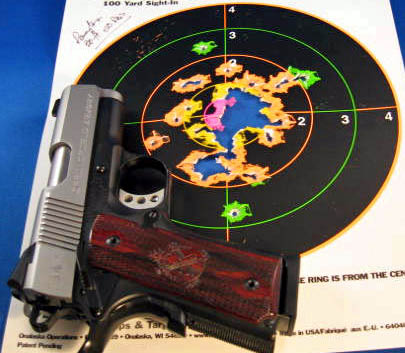

(TARGET CHEWED UP AT 50 FEET WITH 50 ROUNDS OF REMINGTON 115 GRAIN FMJ AMMUNITION)

This pistol is a hoot to shoot!

Sunday, January 21, 2007

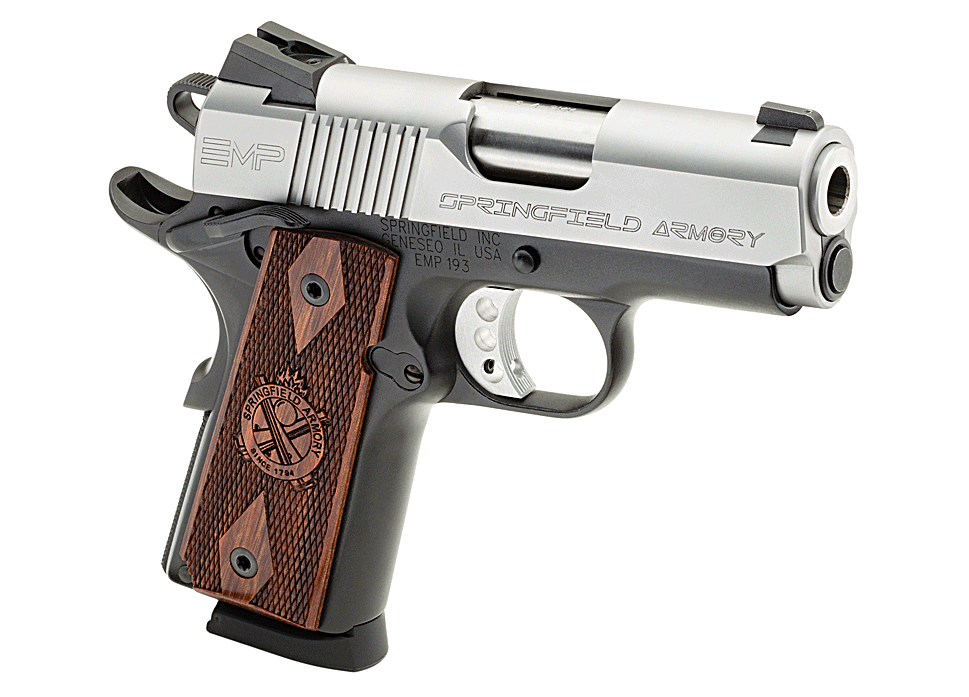
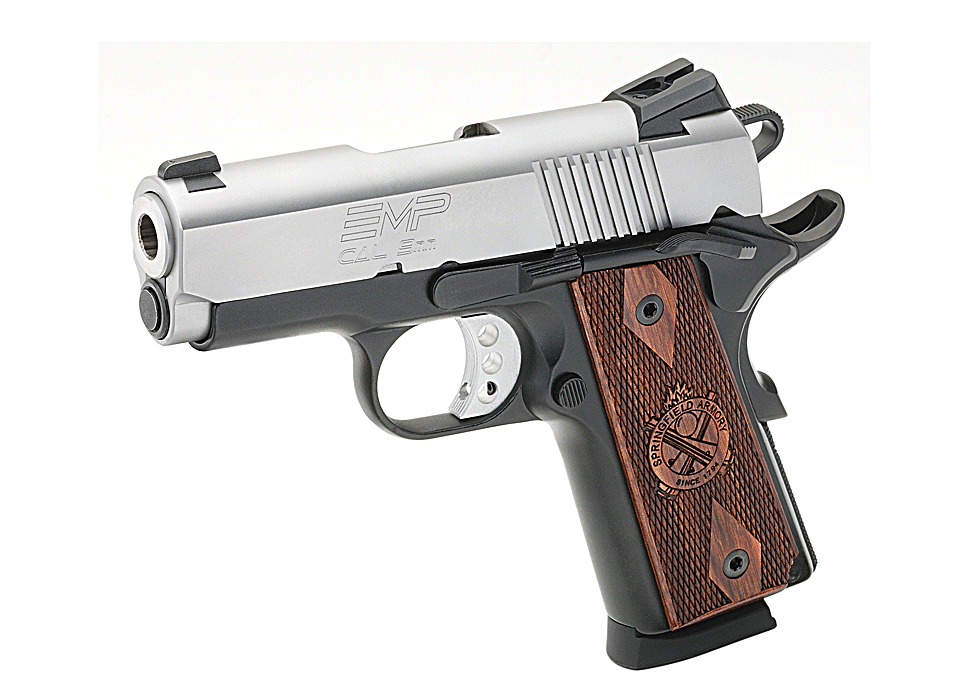
Springfield EMP (Enhanced Micro-Pistol) in 9mm.


(Images copied from the Springfield Website)


It is no secret that I am a fan of the 1911 platform. The fourth handgun I ever purchased was a brand spankin’ new nickel-plated Series 70 Colt Government Model. Like most guns I have owned that one eventually left my home and was sold to a Cook County, Illinois Corrections Officer at a time when I was having a hard time meeting the rent payment. Several years later I replaced it with a Colt Combat Elite and that one eventually left when I was having trouble making a mortgage payment. Fast Forward to 2003 when I was bitten by the Kimber bug. In a few short years 5 Kimbers, 2 Springfields, and a Paraordnance 1911 have all come and gone. My current favorite is the Taurus PT1911, an economical, utterly reliable, and amazingly accurate Government sized 1911.

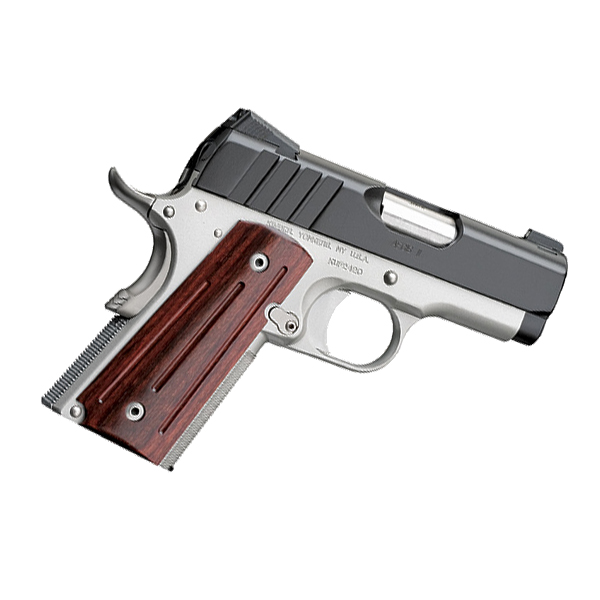
In early 2006 Kimber released the smallest 1911 ever made (by their account) named the Aegis II. Then, in late 2006 Springfield countered by releasing the EMP (enhanced micro pistol). Suddenly Kimber lost the mantel of “smallest 1911 ever made”. The EMP was obviously aimed at the same concealed carry customer that Kimber was courting with the Aegis.

Let’s first examine the Kimber Aegis II. This is a finely made 1911 on their Ultra Carry frame and chambered for the 9mm cartridge. The Aegis sported night sights, very slim grips, and a hammer that had the spur completely bobbed off. This last feature always bothered me. The pistol had a beaver tail grip safety to protect the web of your hand from being bitten by the hammer spur, but…there was no spur. Also, once the hammer was cocked you could not easily uncock it. Normally you would put your thumb on the hammer spur, gently pull the trigger and ride the hammer down with your thumb. The only way I could release the hammer on the Aegis was to place the thumb of my non-shooting hand between the hammer and frame and pull the trigger allowing the hammer to pinch my thumb and then slowly pull my thumb out, allowing the hammer to gently fall into place.

The Springfield EMP
Springfield wisely gave us a skeletonized commander style hammer complete with the needed spur. Here are the general specifications on the EMP:

Caliber: 9 mm
Capacity: 9 + 1
Barrel: 3 inches
Sights: 3 dot tritium night sights front and rear
Weight: 23 ozs.
Length: 6.6 inches
Trigger pull: 5 to 6 pounds
Slide: Stainless steel, dehorned
Frame: Black anodized alloy

Aside from the hammer, there were other improvements that Springfield made over the Aegis. The 1911 was originally designed specifically for the .45 ACP cartridge and after WWII when Colt decided to offer it in other calibers they merely changed the barrel and magazine otherwise the pistol maintained its original dimensions. The 9mm Kimber Aegis II was also manufactured on the same frame as their .45 ACP. Springfield, on the other hand, decided to utilize the 1911 platform, but completely redesign the pistol around the 9mm cartridge which is smaller than a .45 ACP. The result is a smaller and thinner pistol. It is only slightly larger than my Walther PPKS .380 pistol. Another great feature, in my opinion, is that Springfield was able to squeeze 9 rounds into the magazine giving a full capacity of 10 rounds (9 + 1 when the chamber is loaded). The Aegis holds one round less. The only thing on the Aegis that I miss is checkering on the front grip strap. For some reason Springfield did not see fit to checker this area of the pistol and as this is a small, relatively light-weight pistol I think checkering would be an aid in maintaining a consistent grip on follow up shots.
(The Springfield EMP overlaid on an image of their original micro-sized pistol--image copied from the Springfield website.)

I also really like the things Springfield adds to the package. With a Kimber you get one pistol which contains one magazine. I was pleasantly surprised to see not one, but three magazines in the pistol case along with a Kydex holster and a Kydex magazine carrier for the two extra magazines. As a traditionalist I am not a Kydex fan and would much prefer leather, but it was damn nice of Springfield to include these accessories.

At The Firing Line
On the day I picked up the Springfield I had the opportunity to put about 30 rounds through it. Felt recoil was negligible. I did encounter one failure to feed and on two occasions the hammer did not lock in the open position after firing the last round in the magazine.

Yesterday when I went to the range I took 400 rounds of ammunition 150 of which were premium defensive hollow points. I was interested to see how the EMP functioned with the latter after reading on several chat boards that the EMP did not feed hollow points. Upon arriving at the Impact Guns range I began the session with the hollow point ammunition.

Buyer’s Remorse?
I have to say that I was initially appalled at what was happening. The EMP absolutely refused to chamber the hollow points from three different manufacturers. Perplexed, I switched to full ball ammo and, although it fed, the slide would not lock back and I encountered many, many failures to eject. Although it was superbly accurate, it was utterly Unreliable!

I sat down with a rather sick feeling in my stomach caused by the notion that I was holding a very expensive paperweight in my hand, rather than a highly reliable concealed weapon. Then, it dawned on me. All finely tuned 1911’s require a break-in period, usually around 200 rounds (Kimber recommended 700 for the Aegis II and I recall it took almost 1,000 rounds to properly break-in the Kimber Raptor). With some trepidation, I went back to the full ball ammo and shot away. It seemed to get better and miraculously, at about round 200 it all came together. The slide was locking back when the magazine was empty and the pistol was chambering and ejecting the ammo. I then went back to the hollowpoint ammo and it fired without a hitch!

Here’s How She Shot
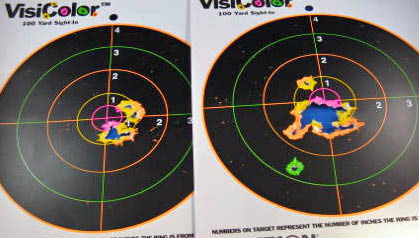
(Target on the left was shot at 21 feet using 9 rounds of Remington 115 grain FMJ ammunition. Target on the right was shot at 21 feet using 30 rounds of the same ammunition.)

(Target on the left was shot at 21 feet with Winchester 115 grain FMJ Ammunition. Target on the right was shot at the same range using 30 rounds of Remington 115 grain FHJ Ammunition.)
(The target on the left was shot at 30 feet with 50 rounds of Remington 115 grain FMJ Ammunition. The target on the right was shot at 50 feet with 50 rounds of Winchester 115 grain FMJ Ammunition.)


(The target on the left was shot at 21 feet with 10 rounds of Speer Gold Dot 115 grain GDHP ammunition. The target on the right was shot at the same range using 20 rounds of Speerk Gold Dot 124 grain +P JHP ammunition.)
(The target on the left was shot at 21 feet with 20 rounds of Wolf Gold 147 grain JHP ammunition. This is a new round and interesting as it is a heavier than usual bullet, has an advertised muzzel velocity of 985 feet per second and is fairly accurate in this short barrel.)

The End Result
I like the EMP a lot, and a lot more than the Aegis…which is a good thing as I traded-in the Aegis on the EMP.

Sunday, January 07, 2007

Smith & Wesson Combat Handguns
Model 1911PD & Model 586 L-Comp


In this edition we examine two combat handguns from Smith & Wesson, the Model 1911 PD in .45 ACP and the Smith & Wesson 586 L-Comp from S & W’s performance center chambered in caliber .357 Magnum. Perhaps we should start by describing what a combat handgun is and is not. One of the most best and basic description was given by Col. Jeff Cooper when he was asked what features a combat handgun should have. His reply was “good sights, a manageable trigger, and precious little else”. In his direct way Cooper described what it is and isn’t. It is basic & simple and devoid of all of the bells and whistles that some people are fond of adding on. While many custom options are good we need to be cognizant of the fact that the more do-dads that are added on mean more things to be taken into consideration in the face of the turmoil that occurs in a shooting situation and it also means that there are more things that could fail, break, malfunction, and fall out when your fat is in the fire. Although I do not care for Glock pistols they are simple to operate with “precious little” in the way of add-on options that might go wrong at the wrong time. There are probably three other requirements that I would add along with good sights and a manageable trigger and those would be reliable, acceptably accurate, and chambered in a major caliber.

Model 1911PD

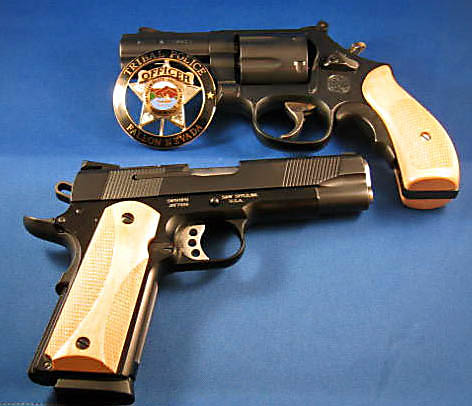
Both of the handguns being examined in this article fit the bill. The Smith & Wesson 1911PD is chambered in the combat tested .45 ACP, has a great single action trigger, good Novak Lo Mount 3-dot sights, has given me no reliability problems in the 1,000 rounds I have put through it and, while not a target grade tack driver, is more than acceptably accurate. Here are the specifications for this pistol:

Model: SW1911PD
Caliber: .45ACP
Capacity: 8+1 Rounds
Barrel Length: 4 1/4"
Front Sight: Dot Front Sight
Rear Sight: Novak Lo Mount Carry
Grip: Light Cherry from Barsony Holsters & Belts (available on eBay)
External Safety: Single Side
Frame: Medium
Finish: Blue/Black
Overall Length: 8"
Material: Scandium Alloy Frame/Carbon Steel Slide
Weight Empty: 28 oz.

The Model 1911PD sports a scandium alloy frame with a carbon steel slide and is therefore fairly lightweight at 28 oz. It definitely has a little oomph when fired, but I actually found it to be fairly fun. I spiced up both the 1911PD and the 586 L-Comp with Light Cherry wood grips from Barsony Holsters & Belts, which I found on eBay. I was looking for something different and inexpensive and the Barsony grips fit both requirements; the grips were less than $20.00 each and the grain in the wood was so fine that they almost give the appearance of being aged ivory.

Here’s how she shot:


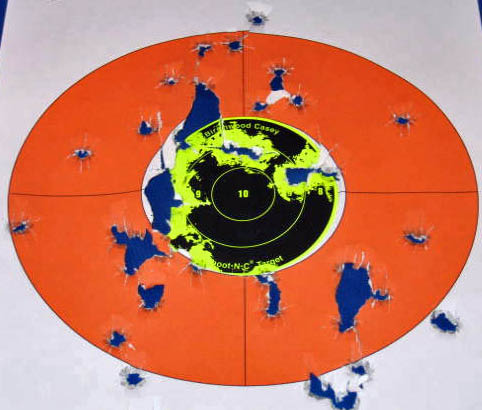
(50 rounds of Independence 230 grain FMJ ammo fired at 21 feet)


(50 rounds of Mag Tech 230 grain FMJ at 30 feet)


(50 rounds of Independence 230 grain FMJ at 50 feet)


Model 586 L-Comp

The 586 L-Comp comes from the Smith & Wesson Performance Center meaning this is a custom production model. However it still fits both mine and Cooper’s requirements for a Combat handgun. The .357 Magnum is certainly a major caliber (and the 586 gives you a capacity of 7 rounds rather than just 5). As is it a revolver it is certainly reliable, the trigger was slicked up at the factory the rear sight is adjustable and the front sight is ramped with an embedded Tritium night sight dot. Lastly all of the preceding attributes along with the compensated barrel help to make this revolver more than acceptably accurate.

Model: 586 L-Comp
Caliber: .357MAG/.38+P
Capacity: 7 Rounds
Barrel Length: Full Lug 3" Ported
Front Sight: Ramp with Tritium Dot Night Sight
Rear Sight: Adjustable Black Blade
Grip: Light Cherry Service Grips from Barsony Holsters & Belts augmented with a Tyler T-Grip (both available on eBay)
Frame: Medium
Finish: Black
Overall Length: 8"
Material: Carbon Steel
Weight: 37.5 oz.

The 586 L-Comp is actually fairly pleasant to shoot with full powered factory .357 ammunition. This is due to the fairly hefty weight (almost 10 ounces heavier than the scandium 1911PD) and the compensated barrel. In fact, with the compensated barrel and the full powered ammo, this little revolver is a bonafide fire-breathing dragon. I hope to take my digital camera with me to the range to try to capture the image of the fireball that is expelled when this handgun fires.

With a number of different brands of ammo, here’s how she shot:


(28 rounds of Winchester 110 grain JHP .357 ammo fired at 21 feet)


(25 rounds of Federal Fusion 158 grain JHP .357 Magnum ammo at 21 feet--the stated velocity on this round is 1240 feet per second expending 540 foot pounds of energy)


(another good performer turned out to be Wolf Gold 158 grain JHP .357 ammo fired at 21 feet)


(65 rounds of MagTech 158 grain SJHP .357 ammo fired at 21 feet)


(21 rounds of MagTech 158 grain .38 Special +P fired at 21 feet)


(65 rounds of MagTech .357 158 grain SJSP fired at 50 feet)
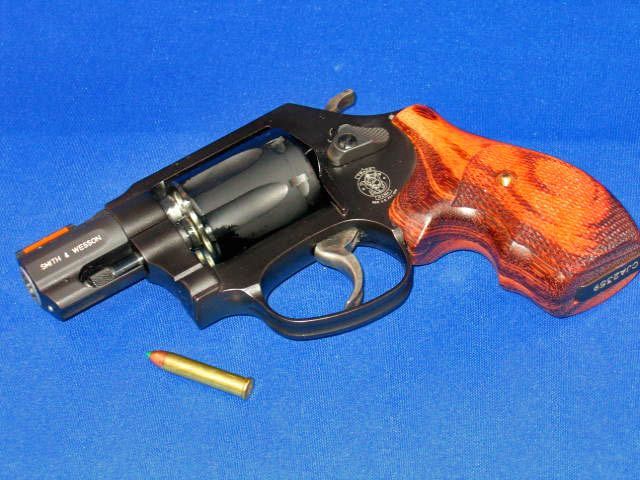
Smith & Wesson Model 351PD .22 Magnum

I have always had a soft spot in my heart for the .22 Magnum. The first firearm I purchased as a lad of 19 was a Marlin model 783 bolt action .22 Magnum holding 10 rounds in a tubular magazine underneath the barrel. I wanted a caliber more powerful than a plain old .22 Long Rifle. I scanned the catalogue pages of the 1976 Guns and Ammo Annual and found the Marlin. So, not realizing that the .22 Magnum rounds were about three times more expensive than the Long Rifle cartridges, I went into the Southern Plaza branch of Em-Roe Sporting Goods and plunked down my hard earned Osco Drug part-timer’s wages and ordered the Model 783. Years later while living in Los Angeles I purchased a stainless steel Smith & Wesson J-frame .22 magnum revolver with a 3 inch bull barrel from the Pony Express Gun Shop in Northridge based upon a favorable article I read, again, in Guns and Ammo. I eventually traded it in on something I don’t remember and was very interested with Smith & Wesson introduced a lightweight J-frame .22 Magnum revolver.

The specifications:

Model: 351PD
Caliber: .22MAG
Capacity: 7 Rounds
Barrel Length: 1 7/8"
Front Sight: HI-VIZ Front
Rear Sight: Fixed
Grip: Wood Grips
Frame: Small - Chiefs Special Style
Finish: Black Matte
Overall Length: 6 1/4"
Material: Aluminum Alloy
Weight Empty: 10.6 oz.

Smith & Wesson had given this model 351 the “PD” designation which stands for “Personal Defense”. You can protest all day long that the .22 Magnum is not appropriate for defense against anything other than vicious squirrels and you won’t get an argument from me. Although we would all have to agree that a great number of people have chosen a .22 Long Rifle for concealed carry. After all, North American Arms sells a lot of their teeny-tiny Mini-Revolvers and they ain’t being used for hunting! Besides, at 10.6 ounces the S&W 351PD is extremely lightweight and offers you two more rounds than the NAA Mini-Revolver.

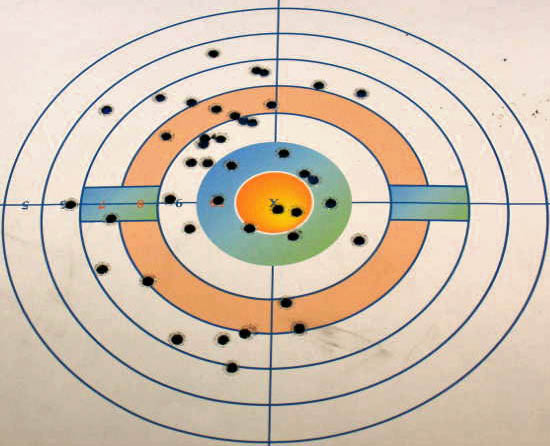
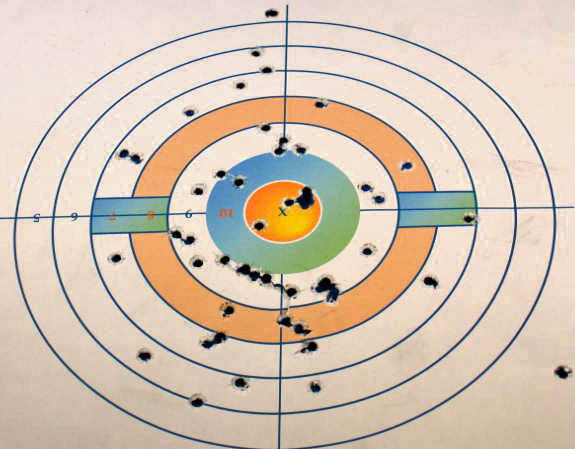
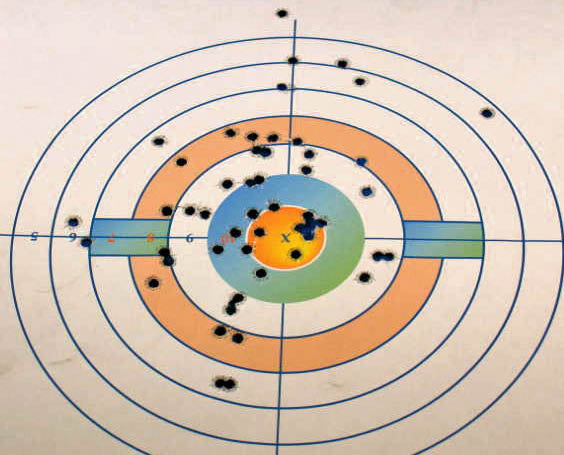
I have written about this revolver before and this test was to find the best load. The .22 Magnum has never actually gained much of a reputation as an accurate cartridge and as this revolver only sports a 1 /78 inch barrel it didn’t really set the world on fire when I tested it before. For this review I rounded up all of the different .22 Magnum loads I could find at Sportsman’s Warehouse. These included the Winchester Dynapoint, CCI Maxi-Mag TNT, and the CCI Maxi-Mag + V. As I headed off to shoot my test I stopped by Cliff’s Guns, Safes, and Reloading where Cliff had a few boxes of Remington Premier .22 Magnum ammo sitting on the shelf behind the counter.

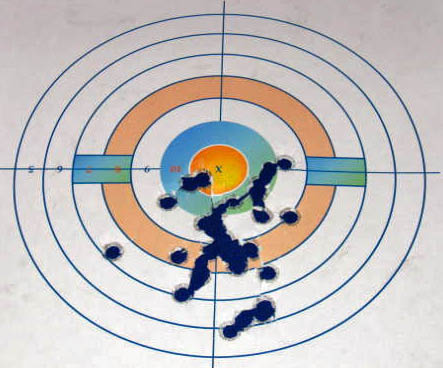
The targets, 50 rounds fired at 21 feet for the Winchester and two CCI loads are shown below. While they are OK for a fairly short distance, they are hardly spectacular. (Target 1-CCI Maxi-Mag TNT, Target 2-CCI Maxi-Mag + V, Target 3- Winchester Dynapoint)


The Remington, on the other hand turned in quite a good performance from the short barrel.

The Remington Premier sports a Hornady V-Max spitzer bullet that weighs 33 grains. In a six inch barreled revolver the Remington has been clocked at 1,471 fps and 158.5 ft-lbs of energy. In this short of a barrel we would expect those numbers to reduce more than a tad. Regardless, due to the accuracy and ballistics the Premier appears to be the best bet if carrying a .22 Magnum revolver for self defense.